For years, office design has been built around a simple assumption. Real work happens at desks and meeting tables. Everything else has often been treated as a “nice-to-have”, with break areas and relaxed seating tucked away in corners.
But modern workplaces are changing.
As hybrid working becomes the norm and employee wellbeing takes centre stage, soft seating has quietly become one of the most effective tools in creating productive, flexible and people-focused offices. It is the unsung hero of the modern workspace and one that deserves far more attention.
What Counts as ‘Soft Seating’ in a Modern Office?
Soft seating goes far beyond a single sofa in the breakout area. In today’s offices, it includes a wide range of furniture designed for comfort, flexibility and informal work.
Common types of office soft seating include:
Sofas, ideal for breakout spaces, receptions, and informal meetings
Modular seating systems, reconfigurable pieces that grow and adapt with your team
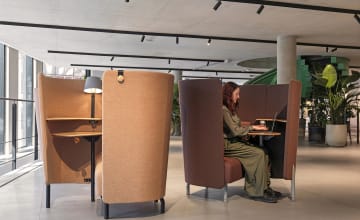
High-back acoustic sofas, offering privacy and sound absorption in open-plan spaces
Poufs and ottomans, flexible and lightweight seating for quick collaboration or relaxation
Soft Seating Improves Productivity, Here’s the Science
Productivity is not about sitting at a desk in the same position all day. In fact, remaining static for long periods is one of the biggest contributors to fatigue and discomfort at work. Research consistently shows that changing posture throughout the day helps maintain energy levels and focus.
Soft seating encourages this natural movement. It gives people the freedom to shift between upright working, relaxed discussion and quieter moments of reflection without leaving the workspace. This variation supports both physical comfort and mental wellbeing.
There is also a strong link between comfort and creativity. Informal seating helps people feel more relaxed, which in turn supports problem-solving and idea generation. When stress levels are lower, collaboration tends to improve, and conversations flow more easily. For neurodivergent employees in particular, access to calmer, less formal spaces can make a meaningful difference to how supported they feel at work.
The Acoustic Advantage No One Talks About
One of the most overlooked benefits of soft seating is its impact on noise levels. Upholstered furniture naturally absorbs sound, helping to soften the acoustics in busy open-plan offices.
High-back or partially enclosed soft seating takes this a step further by creating small, informal zones where conversations can happen without disturbing others. These areas are ideal for quick one-to-one discussions, short video calls or focused work that does not justify booking a meeting room.
By integrating soft seating thoughtfully, businesses can improve acoustic comfort without relying solely on fixed partitions or enclosed rooms.
Soft Seating Creates Natural Collaboration Zones
People instinctively behave differently in relaxed environments. When seating is informal and comfortable, conversations feel less pressured and more open.
In many offices, soft seating areas quickly become natural collaboration zones. Teams gravitate towards them for brainstorming, problem-solving and informal catch-ups because they feel more approachable than traditional meeting rooms.
These spaces also play an important role in building culture. They encourage spontaneous interaction, strengthen relationships and help teams feel more connected, especially in hybrid workplaces where in-person time is valuable.
How to Choose the Right Soft Seating for Your Office
Selecting the right soft seating starts with understanding how your office is used. The needs of a collaborative team will differ from those of a quieter, focus-driven workplace, and client-facing areas require a different approach again.
Acoustics, durability and maintenance should all be considered alongside colour, texture and overall design. It is also important to think about accessibility, including seat height, firmness and ease of movement, to ensure spaces work for everyone.
Deciding between modular and fixed seating depends on how much flexibility is needed now and in the future. Expert guidance can help ensure these choices support both day-to-day use and long-term plans.
Soft Seating as Part of a Well-Balanced Office
Soft seating works best when it is considered as part of the overall workspace rather than added as an afterthought. When integrated alongside desks, meeting areas and quiet zones, it supports a wider range of working styles and allows people to choose how and where they work throughout the day.
The most successful offices provide variety. They recognise that focused desk work, collaboration, informal conversations and moments of pause all play a role in productivity. Soft seating helps bridge the gap between formal and informal spaces, creating an environment that feels flexible, welcoming and genuinely supportive of the people using it.
If you want to review how your existing spaces are being used and how soft seating can be incorporated, Love Your Workspace can help. Contact us today by calling 0330 332 0880 or dropping us an email at projects@loveyourworkspace.co.uk to see how we can help you!